CRISPR-Cas9 editing, Base Editing, and Prime Editing represent complementary genome editing technologies, each using a distinct mechanism to introduce genetic changes. The table below provides an overview of the key steps in the editing process underlying each approach.
| CRISPR-Cas9 Editing | Base Editing | Prime Editing |
|---|---|---|
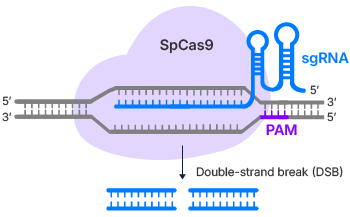 |
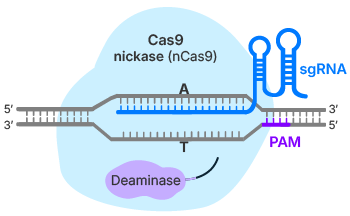 |
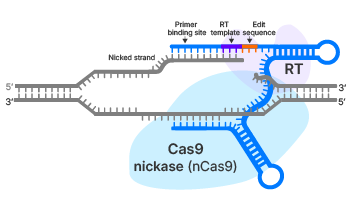 |
|
Mechanism:
|
Mechanism:
|
Mechanism:
|
| Feature | CRISPR-Cas9 | Base Editing | Prime Editing |
|---|---|---|---|
| Double-strand DNA break required |
Yes |
No |
No |
| Donor DNA template required |
Often required for precise insertions |
No |
No |
| Supported edit types |
Gene knockouts, insertions, and HDR-mediated modifications |
A→G and C→T base conversions |
All base substitutions, small insertions, and deletions |
| Editing precision |
Broad editing outcomes dependent on DNA repair pathways |
Highly precise single-base changes |
Precise sequence modifications with broad editing flexibility |
| Targeting flexibility |
Broad target accessibility |
Limited by editing window and PAM requirements |
Broad edit capabilities across many genomic loci |
| Genotoxicity considerations |
Higher due to double-strand break formation |
Lower due to absence of double-strand breaks |
Lower due to absence of double-strand breaks |
| Typical applications |
Gene knockout, gene insertion, functional genomics |
Precise nucleotide correction, disease modeling, translational research |
Disease mutation correction, precision engineering, translational research |
| Design complexity |
Relatively straightforward |
Moderate |
More complex due to pegRNA design requirements |
| Best used when |
Creating knockouts or introducing larger insertions |
Correcting specific point mutations with high precision |
Installing precise substitutions, insertions, or deletions without donor DNA |
RUO26-4591_001