
CRISPR Base Editing Solutions
Precise and efficient adenine base editing without double-stranded breaks
Base editing enables targeted nucleotide conversion without creating double-strand DNA breaks or requiring donor DNA templates. Designed for applications including next-generation cell and gene therapies, IDT base editing solutions combine stocked ABE mRNAs, highly modified guide RNAs, targeting flexibility through multiple PAM options, and technical support to help streamline precision editing workflows.
Designed for precise genome editing
Ordering
- Enable precise A-to-G genome edits without double-strand DNA breaks, helping reduce genotoxicity concerns in translational research applications
- Expand your editable target regions with multiple PAM-compatible editor variants and high-specificity options designed to address challenging genomic loci.
- ABE mRNA screening kit to determine the best approach for your experiments
- Improve editing success with stocked base editor mRNAs, optimized sgRNA XT chemistry, and expert support
What is V106W? ABE8e V106W is a published adenine base editor variant1 designed to reduce bystander editing while maintaining strong on-target editing activity. It is well suited for applications where increased editing precision and a narrower editing profile are desired.
Alt-R™ Cas9 sgRNA XT
Optimized gRNAs that contain additional chemical modifications to help protect from degradation by cellular RNAses and designed for Cas9 genome editing applications. Engineered to improve stability, cellular performance, and editing efficiency in mRNA and lipid nanoparticle (LNP)-based CRISPR workflows.
Tube products
Plate products
Need Help?
Have questions for our CRISPR experts or need a custom solution? Your time is valuable and we’ll prioritize your inquiry. Click on “Request a consultation” to provide brief information about your project, and we’ll be in touch to discuss it ASAP.
Request a consultationProduct Details
Stocked Base Editor mRNAs
IDT offers six stocked adenine base editor (ABE) mRNAs available in 20 μg, 100 μg, and 1 mg formats.
| Product | PAM |
|---|---|
|
WT ABE8e nCas9 |
NGG |
|
WT ABE8e nSpG |
NGN |
|
WT ABE8e nSPRY |
NRN |
|
ABE8e V106W nCas9 |
NGG |
|
ABE8e V106W nSpG |
NGN |
|
ABE8e V106W nSPRY |
NRN |
Designed for Flexibility
- Wild-type and high-specificity V106W variants1 available
- Multiple PAM options expand editable genomic regions
- Stocked mRNAs ship in as little as 1 business day
Alt-R™ Cas9 sgRNA XT
Optimized guide RNAs designed for mRNA- and LNP-based genome editing workflows.
Features
- Available from 2–100 nmol
- Desalt and HPLC purification options
- Increased 2'-O-methyl content for stabilization
- Designed specifically for mRNA and LNP delivery workflows
Base Editing Screening Kit
Evaluate multiple ABE variants simultaneously with a screening kit containing all six editor constructs bundled together.
What's Included
- Six base editor mRNAs
- 20 μg of each editor
- Multiple PAM options
- Wild-type and V106W variants
Why Use a Screening Kit?
Because editing efficiency, specificity, and targetability can vary across genomic loci, researchers often evaluate multiple editor variants to identify the optimal construct for a given target. The screening kit simplifies this process and reduces time spent sourcing individual components.
Which editing approach is right for your application?
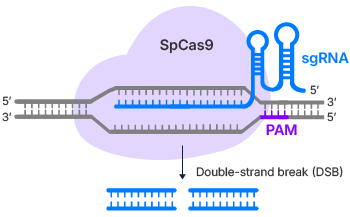
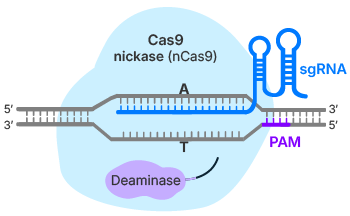
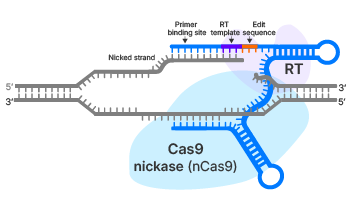
CRISPR-Cas9 editing, Base Editing, and Prime Editing represent complementary genome editing technologies, each using a distinct mechanism to introduce genetic changes. The table below provides an overview of the key steps in the editing process underlying each approach.
| CRISPR-Cas9 Editing | Base Editing | Prime Editing |
|---|---|---|
 |
 |
 |
|
Mechanism:
|
Mechanism:
|
Mechanism:
|
| Feature | CRISPR-Cas9 | Base Editing | Prime Editing |
|---|---|---|---|
| Double-strand DNA break required |
Yes |
No |
No |
| Donor DNA template required |
Often required for precise insertions |
No |
No |
| Supported edit types |
Gene knockouts, insertions, and HDR-mediated modifications |
A→G and C→T base conversions |
All base substitutions, small insertions, and deletions |
| Editing precision |
Broad editing outcomes dependent on DNA repair pathways |
Highly precise single-base changes |
Precise sequence modifications with broad editing flexibility |
| Targeting flexibility |
Broad target accessibility |
Limited by editing window and PAM requirements |
Broad edit capabilities across many genomic loci |
| Genotoxicity considerations |
Higher due to double-strand break formation |
Lower due to absence of double-strand breaks |
Lower due to absence of double-strand breaks |
| Typical applications |
Gene knockout, gene insertion, functional genomics |
Precise nucleotide correction, disease modeling, translational research |
Disease mutation correction, precision engineering, translational research |
| Design complexity |
Relatively straightforward |
Moderate |
More complex due to pegRNA design requirements |
| Best used when |
Creating knockouts or introducing larger insertions |
Correcting specific point mutations with high precision |
Installing precise substitutions, insertions, or deletions without donor DNA |
Product Data
On target vs bystander conversion of various ABE editors in HEK293 cells
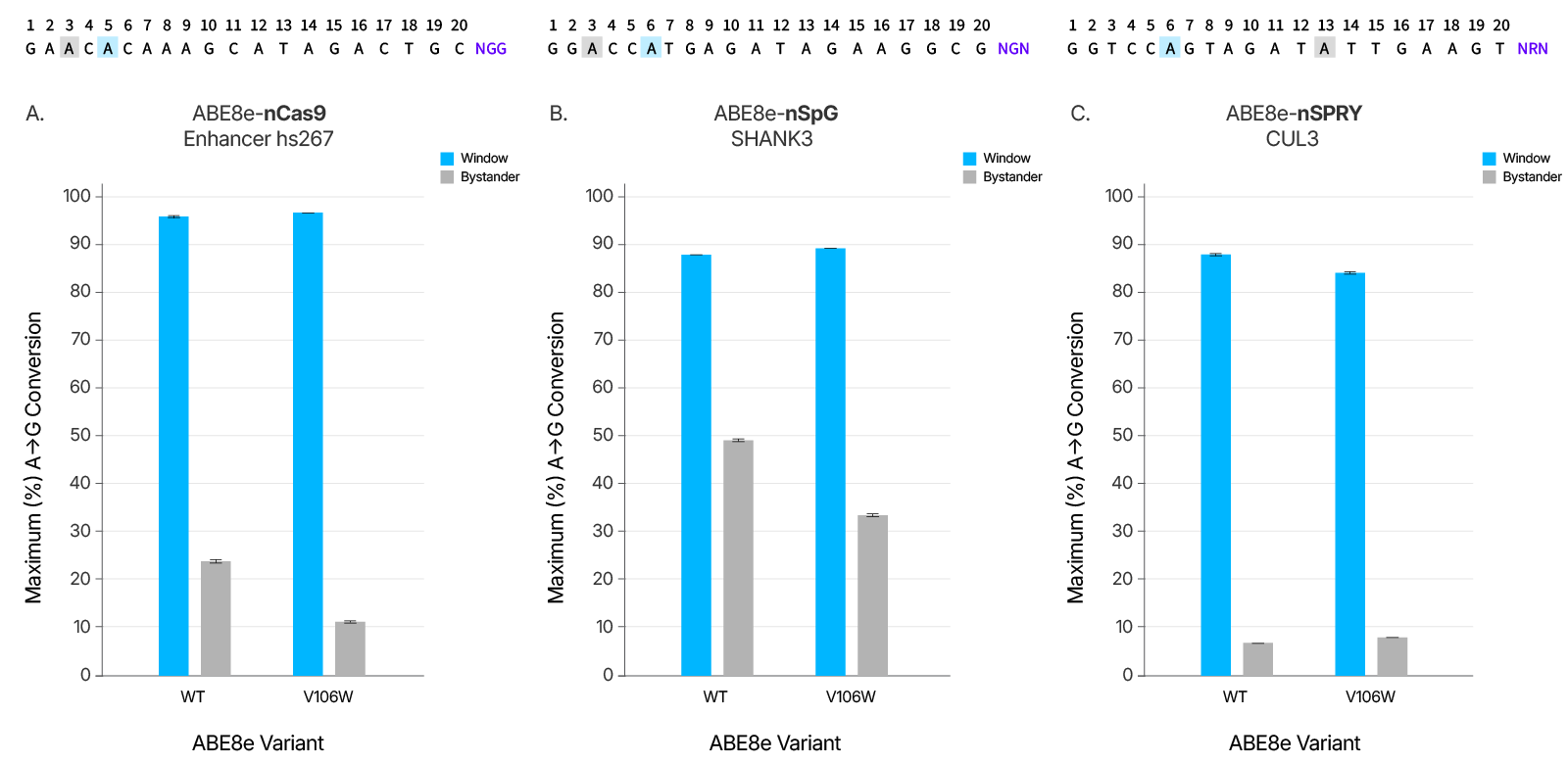
Figure 1. Comparison of maximal window and bystander editing for ABE8e variants. Maximum on-target A→G editing at one base within the canonical ABE8e editing window (protospacer positions 4-12) was compared with the highest observed bystander edit outside the window for ABE8e-WT and ABE8e-V106W paired with nCas9, nSpG, or nSPRY across representative genomic loci in HEK293 cells. Cells were nucleofected with 1,000ng base editor mRNA and 2 µM gRNA using the Lonza nucleofection system. Bars represent mean ± SEM (N = 3 biological replicates). ABE8e-V106W maintained high on-target editing while reducing bystander editing relative to ABE8e-WT at multiple loci.
Base conversion efficiency across various immortal and primary cell lines
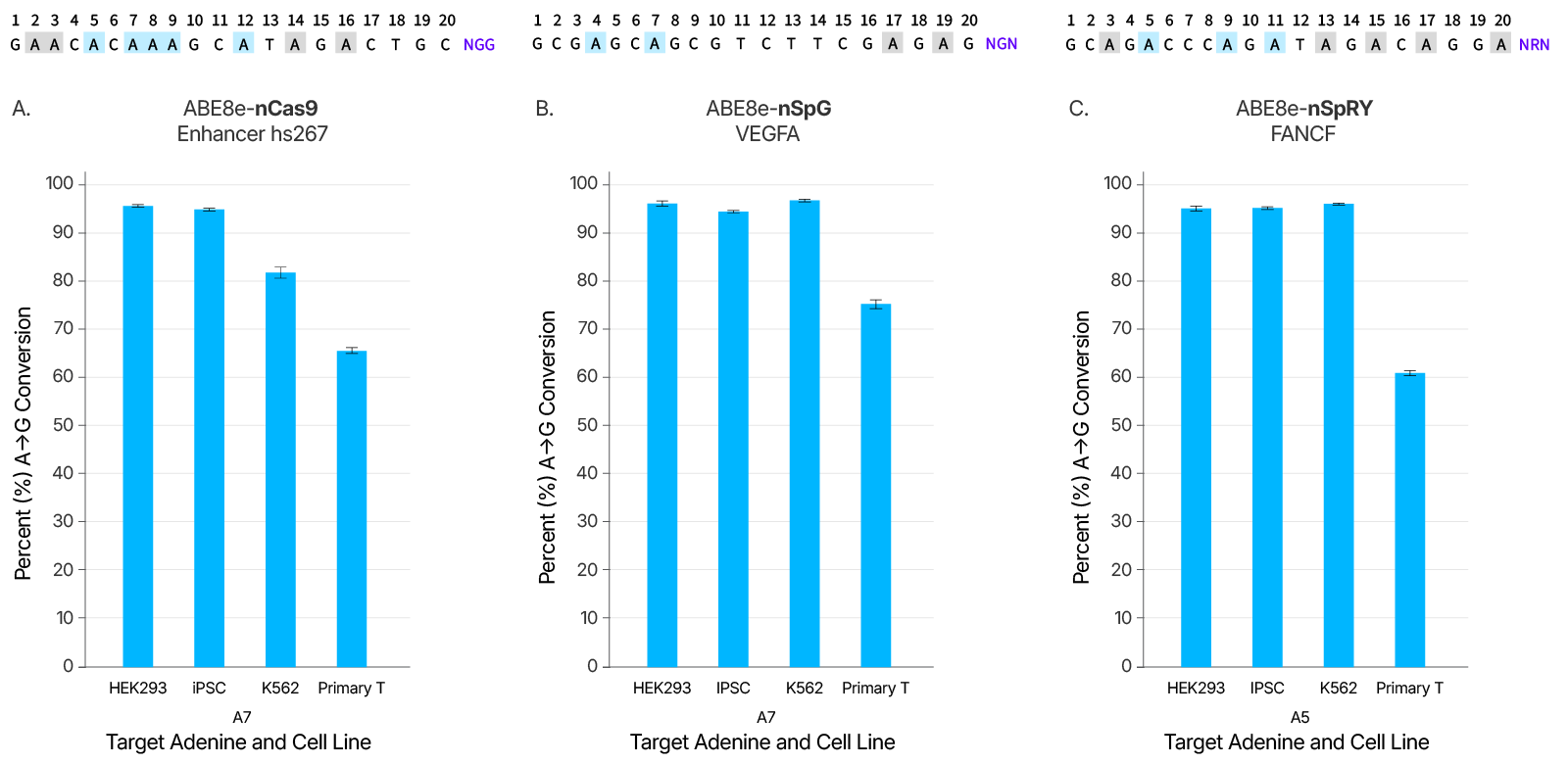
Figure 2. Target adenine editing efficiency across cell types for ABE8e-Cas variant combinations. Target adenine conversion at the indicated genomic loci was measured in HEK293, iPSC, K562, and primary T cells using ABE8e editors paired with nCas9, nSpG, or nSPRY. Data from ABE8e-WT and ABE8e-V106W were combined due to comparable on-target editing efficiencies and are presented as mean ± SEM (N = 6 biological replicates; 3 WT and 3 V106W). Cells were nucleofected using the Lonza nucleofection system with 1,000ng of base editor mRNA in HEK293, K562, and primary T cells or 500ng in iPSCs. gRNA was delivered at 2 µM in HEK293, K562, and iPSCs and 4 µM in primary T cells. High levels of target base conversion were observed across diverse cell types and Cas variants.
ABE conversion efficiency in Primary T cells via LNP delivery
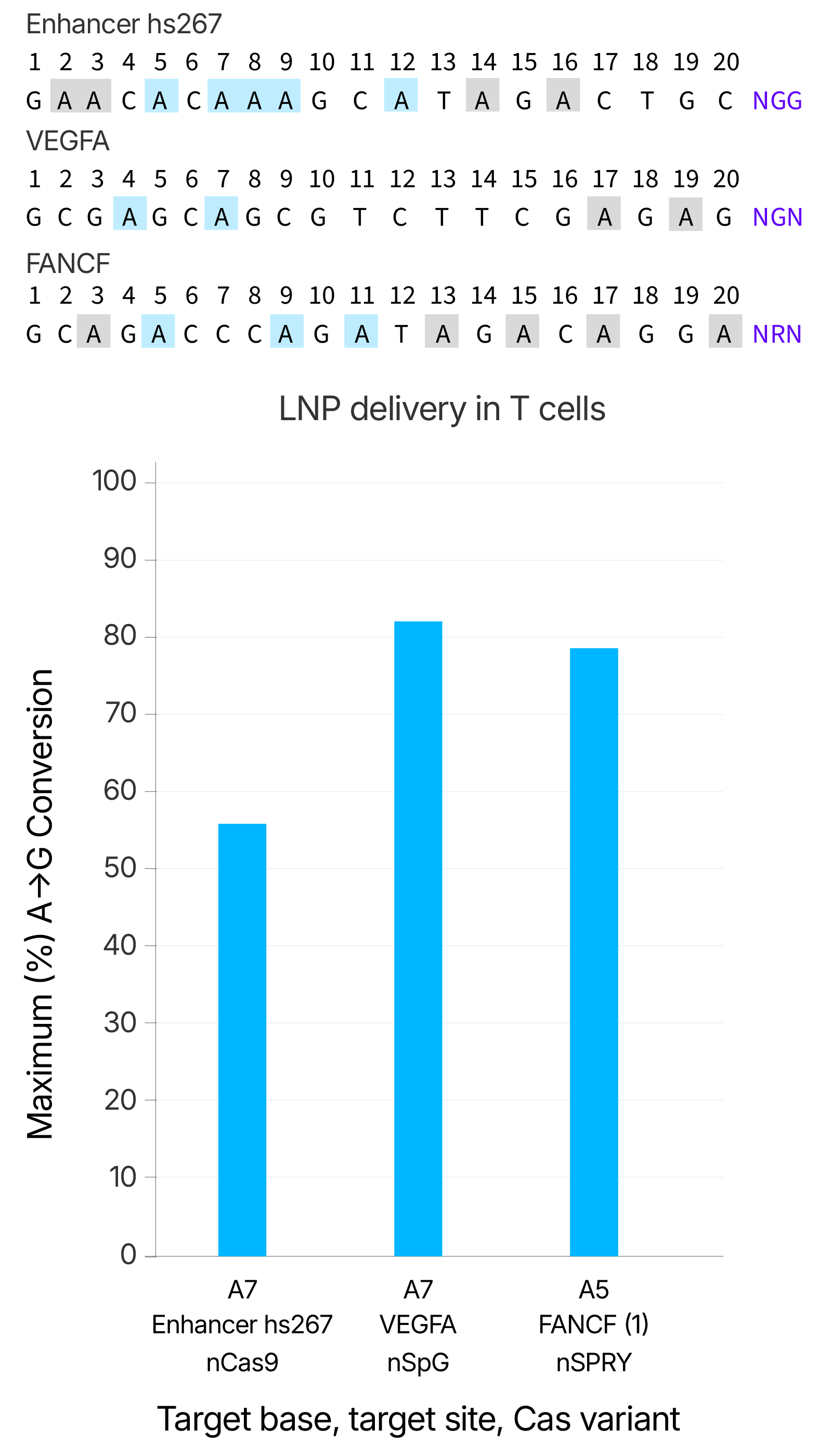
Figure 3. Target base conversion following LNP delivery of ABE8e editor systems. Maximum target adenine editing at the indicated genomic loci was measured in primary T cells following lipid nanoparticle delivery of ABE8e-WT paired with nCas9, nSpG, or nSPRY. Cells were treated with 2 µg base editor mRNA and 2 µg gRNA per million cells. Data are shown as mean ± SEM (N = 3 biological replicates). Efficient target base conversion was observed across all loci and Cas variants tested.
Target base conversion efficiency under singleplex or multiplex conditions
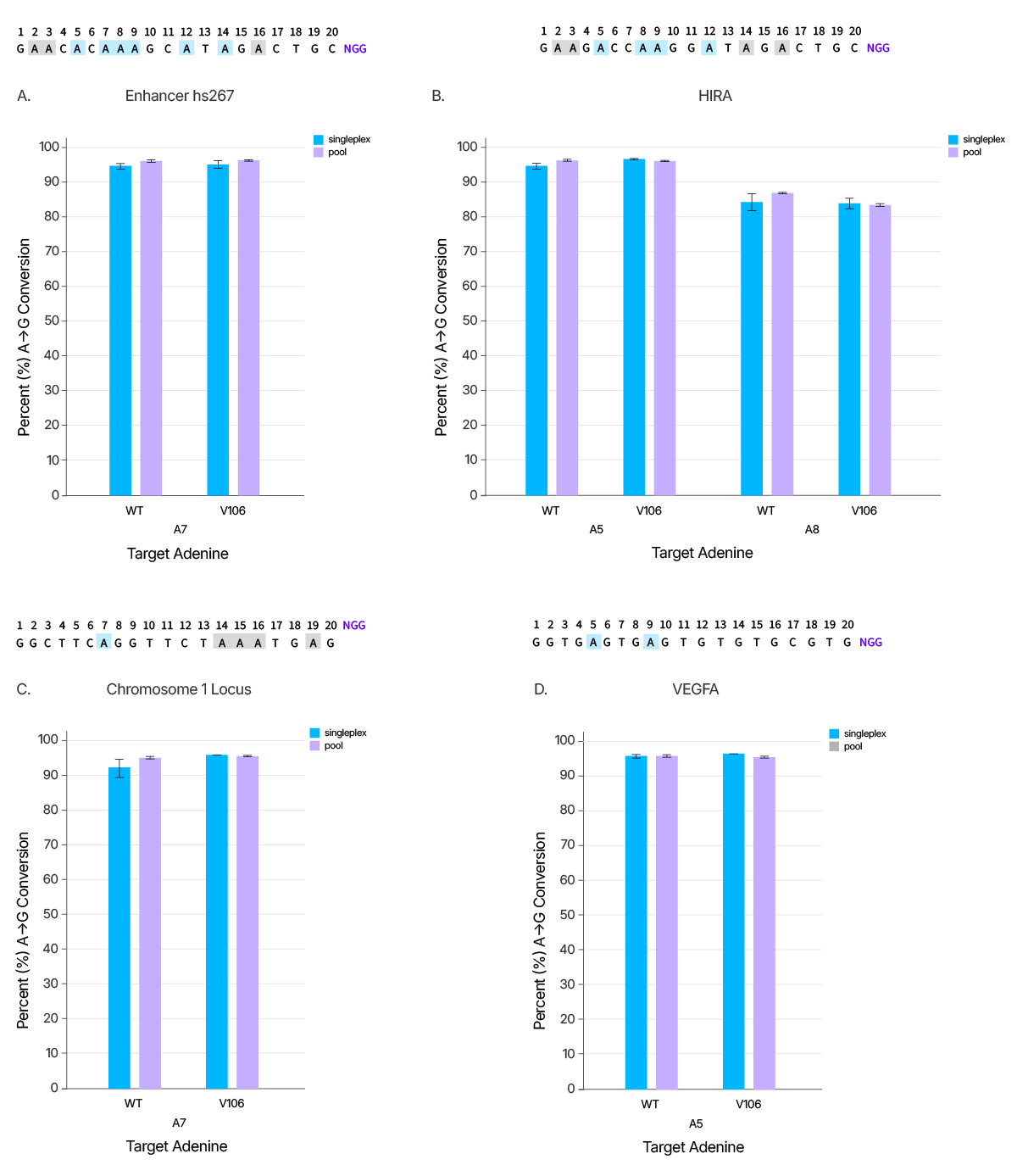
Figure 4. Target adenine conversion under singleplex and multiplex editing conditions. Target adenine conversion was evaluated at four genomic sites in HEK293 cells following delivery of ABE8e-WT or ABE8e-V106W paired with nCas9 under singleplex or 4-plex pooled gRNA conditions. Cells were nucleofected using the Lonza nucleofection system with 1,000 ng base editor mRNA and 2 µM gRNA for singleplex editing or 2 µM of each gRNA for 4-plex pooled editing. Data are presented as mean ± SEM from three biological replicates (N = 3). Comparable editing efficiencies were observed between singleplex and multiplex conditions, demonstrating robust multiplex editing performance across target sites.
Resources
Frequently asked questions
References
- Gaudelli et al. (2020), Directed evolution of adenine base editors with increased activity and therapeutic application (Nature Biotechnology).